Refugee Communities, Hidden Talent, and the Path to Opportunity
I. The Skills to Jobs Gap: The Hidden Refugee Crisis
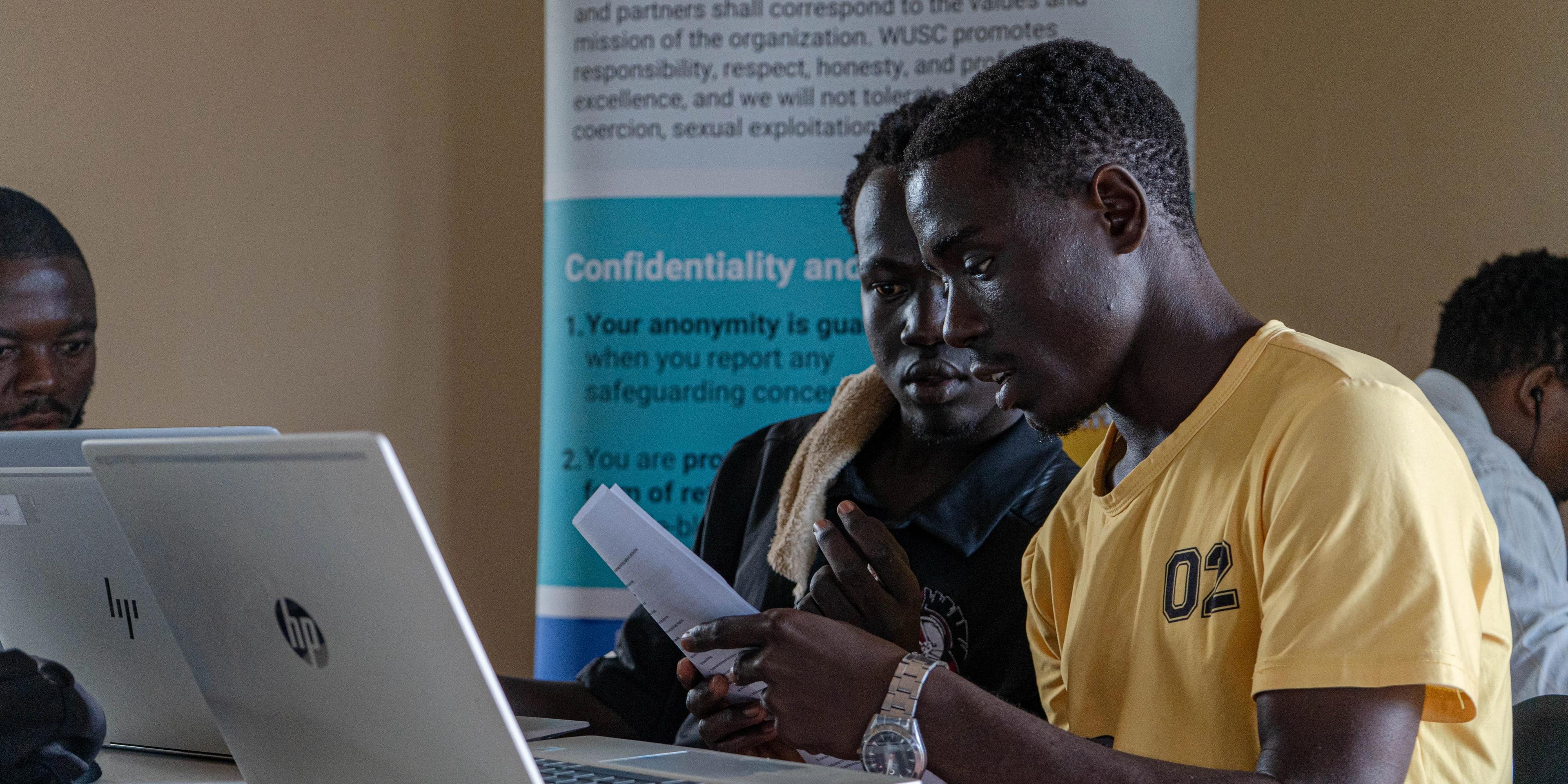
Across the globe, digital transformation is accelerating fast. Companies increasingly rely on remote talent for design, marketing, data support, and creative services. At the same time, a new generation of skilled digital talent is rising within refugee camps and urban settlements. These are young professionals who have embraced digital skills like graphic design, web support, and data analytics.
But here is the painful reality: The challenge is no longer a lack of skills. It is a lack of sustainable access to real, consistent job opportunities.
Training alone is no longer the solution. Talent without access to consistent job openings is like a powerful engine without wheels. Despite the surge in digital readiness among displaced populations, the numbers tell a story of systemic failure:
II. Life in Displacement: More Than Just Losing a Home
Displacement is not a moment. It is a long, grueling, and often permanent condition. The average length of displacement is now measured in decades. During this time, life is defined by a singular, agonizing verb: waiting.
Solving the Structural Barriers
In many countries, invisible walls like bureaucratic red tape, legal restrictions, and employer hesitation make it impossible for refugees to use their training. Even when a refugee has a proven track record of quality work, they are blocked by specific systemic hurdles:
The Documentation Problem: Traditional hiring systems require degrees or identification papers that were lost in the ruins of a home or confiscated during flight.
The Banking Problem: Global payment systems often exclude the very regions where refugees are located, making it impossible to receive international wire transfers.
The Trust Problem: Clients fear the perceived risk of hiring from displacement zones, while refugee freelancers fear being exploited or left unpaid.
Work is not merely a transaction for income. It is the bedrock of identity and self worth. When the right to work is denied, refugees are denied the chance to contribute meaningfully to the human story.
III. Unlocking Invisible Refugee Talent
The world does not see the potential within displacement, but we do. Across refugee settlements, there is a hidden workforce of world class graphic designers, web developers, data analysts, translators, and artificial intelligence trainers.
70 to 80 percent of youth in refugee communities remain unemployed or underemployed even after completing rigorous digital skills training programs.
Only 20 to 25 percent of trained refugees secure a sustained income within a year of completing their programs.
Fewer than 15 percent of these digital professionals succeed in accessing online or remote income streams consistently.
These statistics show a clear mismatch between talent supply and market access. People are being trained for a world that refuses to let them in.These professionals have completed rigorous training, passed quality assessments, and demonstrated professionalism that rivals global service providers. Yet, they remain trapped in a cycle of dependency. Humanitarian aid saves lives in emergencies, but it is not designed to foster long term economic independence. It is a maintenance model, not a growth model.
This is not a talent problem. It is an access problem.
IV. A Different Approach: Why Opengates is the Solution
Opengates was created to address this exact gap. We are the bridge over the canyon that separates refugee talent from the global market. We are not a charity. We are a long-term economic engine built on one belief: Refugees deserve access, not sympathy. They deserve opportunity, not dependency.
What Opengates Does Differently:
Talent Ready from Day One: Our professionals are not just students. They are onboarded, quality assured, and equipped to deliver work that meets international standards immediately.
Real Job Openings: Unlike training programs that end with a certificate, Opengates ends with a contract. We connect refugees to real global businesses for real income.
Safety and Protection: We prioritize the security of the freelancer. We ensure clear project expectations and have built systems to make sure refugees get paid for every hour of labor they contribute.
Employer Focused Solutions: We partner with businesses to build reliable talent pipelines. We show the world that refugees are not burdens to be managed, but assets to be hired.
Dignity at the Center: On our platform, a refugee is not a beneficiary or a case number. They are a professional freelancer. We acknowledge the challenges of displacement without letting those challenges define their worth.
V. Impact: From Individual Success to Community Transformation
When digital talent from refugee communities finds real work, the impact goes far beyond a paycheck:
Local Economies Strengthen: Income earned globally is reinvested into the local community, creating a microeconomic boost.
Confidence Grows: Professional growth restores the sense of agency that displacement tried to steal.
Economic Inclusion: We prove to the world that talent is universal, even if opportunity is not.
Conclusion: Your Role in the Movement
Refugee communities have waited long enough. They do not need more stories written about their suffering. They need systems that actually open doors.
The skills are present. The talent is ready. Opengates has laid the foundation. Now we need partners including employers, non-governmental5 organizations, donors, and investors to activate this opportunity. Whether you are a business seeking dependable remote talent or an organization committed to inclusive growth, the path forward is clear: create opportunities where talent already exists.
Opengates exists to ensure that refugee talent is seen, valued, and connected to the world. Because the future of work should include everyone. No one should be left behind simply because of where they were forced to flee.
Talent is everywhere. Opportunity is not. Let us change that together.